


Albuquerque Wedding Flowers: August & September Floral Trends
31st Aug 2026
Late summer in Albuquerque has a character all its own. August still carries the intensity of the desert sun, while September begins to introduce a softer shift in light, color, and texture.
For couples searching for Albuquerque wedding flowers, August offers a particularly interesting point in the season; there’s still room for saturated summer color, but deeper tones and more textural designs are starting to feel right at home.
We approach this stretch of the wedding calendar as a season in its own right. Sun-washed colors, expressive seasonal flowers, sculptural textures, and details drawn from New Mexico’s natural beauty can all shape the floral direction without turning the celebration into a literal desert theme.
As Albuquerque floral designers, we look at more than what is trending on its own. The venue, weather, available blooms, natural light, and the couple’s style all influence how a late-summer floral vision comes together. Here are the trends giving August and September weddings a fresh direction.
Late Summer Color Is Getting More Complex
Late summer opens the door to a color palette with more depth than the pale tones often associated with earlier summer weddings. Apricot, clay, and cream can create a warm foundation, while dusty rose, burgundy, and sand introduce richer contrast without pushing the wedding fully into fall.
For something brighter, ochre and butter yellow can sit beautifully against warm white. Mauve, plum, and muted peach offer another direction for wedding bouquets and centerpieces, especially when deeper colors are used as accents rather than dominating the arrangement. Terracotta paired with soft green and ivory can create a similarly balanced effect.
These combinations also have a natural connection to Albuquerque’s surroundings, from adobe tones and desert earth to the changing colors of evening light. The goal doesn’t have to be a literal desert theme. Pulling just a few cues from the landscape can give wedding arrangements a strong sense of place while leaving plenty of room for each couple’s individual style.
Dahlias and Zinnias Fit the Late-Summer Mood
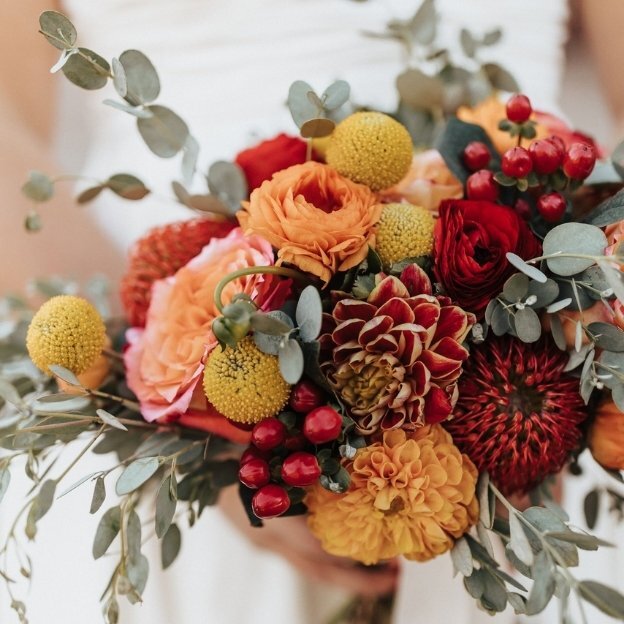
Late summer gives couples plenty of room to play with flowers that bring stronger shape, texture, and color into the design. Dahlias are a standout option, with layered forms and shades that range from cream and blush to apricot, burgundy, and deep red. Zinnias can bring in smaller bursts of color and a looser garden quality that works beautifully alongside more structured blooms.
Depending on seasonal and market availability, cosmos, roses, lisianthus, amaranthus, sunflowers, and asters can also work well in August and September wedding florals. Combining refined focal flowers with lighter or more textural stems can keep handcrafted floral arrangements dimensional without making them feel overly formal.
Availability can change throughout the season, so a specific flower or variety may not always be possible for a wedding day. Keeping some flexibility in the floral plan gives the florist room to work with the strongest available blooms while maintaining the intended colors, proportions, and overall look.
Bring Desert Texture Into the Floral Design
The high-desert landscape offers plenty of visual references beyond color. Grasses, airy foliage, branches, seed heads, and select dried elements can introduce texture while leaving breathing room between blooms. Against softer petals, these more architectural details can give an arrangement definition without relying on layers of dense greenery.
A lighter use of foliage can also put more focus on the individual shapes of the flowers, particularly in ceremony pieces and reception arrangements viewed from several angles. The effect can feel especially fitting in Albuquerque, where open landscapes and distinctive desert vegetation are already part of the setting.
The connection doesn’t need to become a literal desert theme. A few carefully placed textural elements among fresh flowers can reference the surrounding landscape while keeping the overall design polished and appropriate for the wedding celebration.
Desert Texture Gives Florals More Definition
Albuquerque’s high-desert landscape offers a strong reference point for texture. Airy grasses, branches, seed heads, delicate foliage, and select dried elements can create space within an arrangement instead of surrounding every bloom with dense greenery. Paired with softer flowers, these architectural details bring contrast and make individual shapes more noticeable.
This approach can translate beautifully from the ceremony to the reception. A few textural stems can add movement to larger installations, while smaller touches can give centerpieces and boutonnieres a subtle connection to the landscape without turning the wedding celebration into a literal desert theme.
Dried materials can also work as accents rather than becoming the entire design. Used selectively alongside fresh flowers, they add another layer of texture while keeping the overall look polished, dimensional, and grounded in the setting.
Give Bouquets More Shape and Breathing Room
A late-summer bouquet doesn’t need an oversized silhouette to make an impact. Leaving intentional space between flowers allows a few focal blooms to stand out, while varied stem heights and selective trailing elements can create movement without making the bouquet feel unruly.
Scale matters just as much as flower choice. The silhouette and fabric of the dress, the ceremony setting, and how the bouquet will photograph can all help determine its proportions. Against Albuquerque’s expansive landscapes and strong natural light, a more edited composition can keep the flowers visually distinct while allowing the surrounding scenery to remain part of the frame.
The same restraint can carry into attendant flowers and boutonnieres. Repeating a focal bloom, color, or textural detail creates a connection to the bridal bouquet without making every personal floral piece identical.
Let Ceremony Flowers Frame the Desert Setting
An Albuquerque ceremony can already come with a striking backdrop: open skies, distant mountains, adobe architecture, courtyard walls, or the textures of the surrounding desert. Rather than covering those features with florals, arrangements can be positioned to frame what is already there.
Grounded floral clusters can define the altar without creating a solid wall of flowers, while asymmetrical placements can leave portions of an arch or architectural feature visible. Low aisle arrangements are another option for drawing the eye toward the ceremony, with larger floral moments reserved for entrances or other natural focal points.
The result feels connected to the location rather than placed on top of it. When the landscape, architecture, and flowers share the composition, even a bold floral design can complement the setting without competing for attention.
Layer Reception Tables with Varied Floral Moments
Reception flowers don’t have to follow the same centerpiece formula from one table to the next. Alternating low arrangements, bud-vase groupings, and a few larger statement pieces can create a more layered setting, with candles or other decorative elements adding another point of interest where appropriate.
Varying the height and scale of the flowers also gives the room a natural visual flow while keeping guest sightlines clear. Color can move through the reception in a similar way. Instead of placing every shade from the palette into each arrangement, individual colors can appear in different concentrations across the tables.
For long tables, smaller floral moments spaced along the surface can feel especially polished without becoming overly formal. Carrying through a few of the colors, flowers, or textural details used earlier in the wedding helps connect the reception to the rest of the floral design.
Plan Floral Color Around Albuquerque’s Changing Light
Light can make the same flowers look noticeably different as the wedding day progresses. Albuquerque’s bright midday sun can reduce some of the nuance in very pale colors, while late-afternoon and evening light can bring extra warmth to peaches, rusts, golds, mauves, and creams.
That makes timing and placement worth considering alongside the color palette. Ceremony flowers positioned in direct sun will be seen differently from bouquets photographed closer to sunset, and those colors can shift again once the reception moves indoors under artificial lighting.
When planning the florals, consider how the palette will look in the spaces where the wedding will actually unfold. A beautiful combination on a mood board should also hold its character through the ceremony, portraits, and reception.
Late-Summer Heat Still Has a Say
August and early September in Albuquerque can still bring significant heat, especially for an outdoor event. Ceremony timing, direct sun, setup schedules, and the amount of time flowers will spend outside are all worth considering when choosing blooms and deciding where arrangements will be placed.
Some delicate flowers may be better suited to shaded areas or portions of the wedding with less prolonged exposure, while sturdier varieties can take on more prominent outdoor roles. Adequate hydration, careful handling, and thoughtful installation timing can also help flowers stay fresh through the day.
Seasonal floral planning is about more than choosing what looks beautiful in August or September. Accounting for Albuquerque’s weather from the beginning can help couples build a floral plan that suits both their vision and the conditions of the wedding day.
Make the Desert Direction Your Own
Late-summer trends are most useful as a starting point, not a formula. One wedding might pair dahlias with a clean, contemporary tablescape, while another may borrow the desert-inspired color palette but leave dried textures behind. The venue, attire, guest count, date, and personal style can all help determine which ideas belong in the final design.
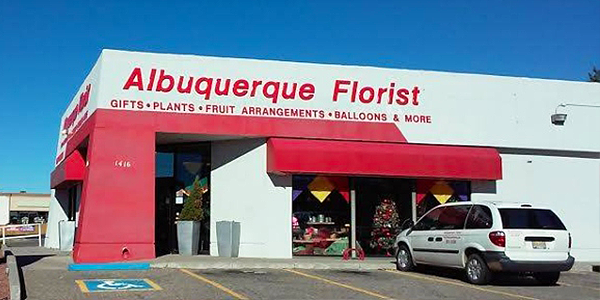
Albuquerque Florist offers custom wedding florals and wedding consultations, giving couples an opportunity to discuss their vision, floral needs, and plans for the day. From bouquets and ceremony flowers to reception designs, each part of the floral plan can be considered within the larger look of the event.
Planning an August or September wedding in Albuquerque? Contact us to schedule a wedding flower consultation and start shaping the florals for your special day.
Frequently Asked Questions
What wedding arrangements work well for an August wedding in Albuquerque?
Late-summer designs can feature dahlias, zinnias, roses, cosmos, and other seasonal flowers, depending on market availability. Warm desert-inspired colors and textural accents can also suit Albuquerque weddings during August.
How can flowers stay fresh throughout an outdoor wedding day?
Flower choices, ceremony timing, shade, hydration, and the amount of time arrangements spend outdoors can all make a difference in Albuquerque’s late-summer heat. Delicate blooms may also be better placed in areas with less direct sun exposure.
What colors work well for a September wedding in Albuquerque?
Apricot, terracotta, mauve, plum, cream, dusty rose, and soft green can transition beautifully from late summer toward early fall. Couples can also use deeper shades selectively to add contrast without making the palette feel fully autumnal.
When should we schedule a wedding flower consultation?
Scheduling early gives couples more time to discuss the venue, floral needs, color direction, and overall design. Specific flower varieties can depend on seasonal and market availability, so flexibility can also be helpful when planning.